
Trout and Landlocked Salmon Access Now Secured on Two Crooked River Tributaries
River restoration work continued in 2026 with the reengineering and replacement of dysfunctional culverts on two Crooked River tributaries. Thanks to a Sebago Clean Waters Regional Conservation Partnership Program (RCPP) grant awarded in 2019, Trout Unlimited National and the Sebago Maine Chapter have been able to partner with Lakes Environmental Association (LEA) to fund projects for the past 6 years on the Crooked River. The most recent road crossing and river connectivity improvements were completed on Barker Brook in Albany Township and an unnamed tributary off Sodom Road in Norway this summer. Sebago TU led by Jim Wescott contacted landowners and secured needed permission for the projects. These improvements will free up two important tributaries that serve as salmon and trout nurseries.
These 2026 projects mark the end of the RCPP grant funding. TU National Maine Project Manager, Lauren Pickford, and LEA lead, Lauren Van Bibber, are working together on another multimillion-dollar RCPP grant application to continue to fund this work. If awarded, Sebago TU will focus on 8 to 10 crossings on the east side of the Crooked watershed while LEA does the same on the west side.
In August 2026, Sebago TU and partner volunteers worked with Lauren Pickford, and river restoration specialist, Mike Brandimarte, to complete a new road crossing and barrier survey on the Crooked River. The Crooked River barrier survey is a Sebago TU project funded by a $9,900 Casco Bay Estuary Partnership (CBEP) grant. Mike Brandimarte is the contracted project manager, and Jim Wescott is the project lead. Thanks to the efforts of Lauren Van Bibber from LEA, Janelle Goeke from CBEP, and Sebago TU volunteers Jim Wescott, Mike Tero, and Chris Ricardi, approximately 180 crossings were surveyed. The purpose of the barrier survey is to prioritize and then target improvement projects for 16 to 20 crossings over the next five years. The results of that survey will be used in cooperation with the Maine Department of Inland Fisheries and Wildlife to prioritize locations for future river restoration efforts.
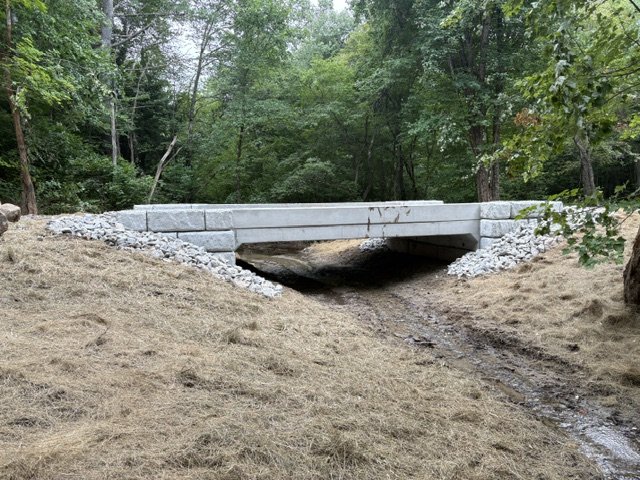
Replaced River Crossing
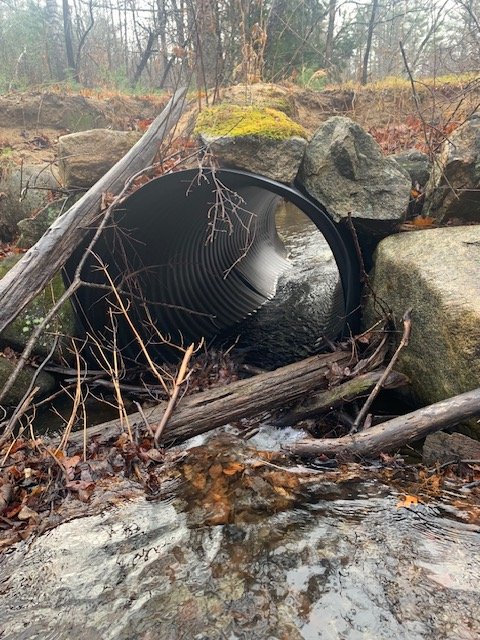
Before Removal