Sebago Chapter Members Attend TU Expeditions
TU Expeditions
Back in 2022, when Luke Fogg was in high school, he attended Maine TU’s Trout Camp on the banks of the Kennebec River. He spent the week with a dozen other teenagers learning to fly-fish, tie flies, study aquatic insects, and water quality—all while forming new friendships in the outdoors. Across the country, TU chapters hold trout camps to introduce young people to rivers and the life they support. The hope is that hands-on experiences like Luke’s will deepen their appreciation for natural resources and inspire a new generation of conservationists. Later that year, Luke and two other Maine trout campers took the stage at TU’s National Meeting in Portland. Speaking to more than 200 TU members at the closing dinner, Luke shared stories of adventure and appreciation that brought the value of Trout Camp to life.
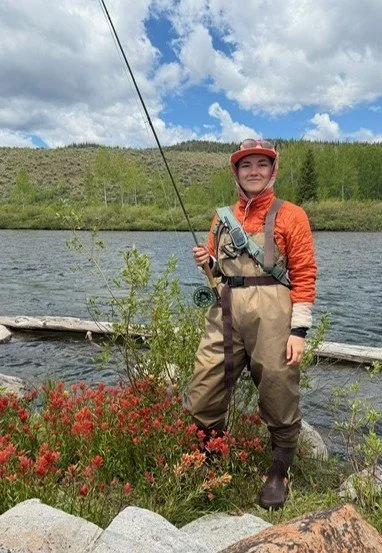
Luke’s involvement with TU did not end at Trout Camp. After enrolling at Southern Maine Community College to study marine biology, he teamed up with architecture and engineering student Júlia Marquardt Luesma to organize the SMCC Fishing Club. Júlia became the club’s president, and Luke became vice president. They also joined the board of the Sebago Chapter, serving as Youth Outreach Coordinators and helping to organize fishing trips and fundraising events. This past spring, both were accepted into the TU Expeditions Program. With financial assistance from the chapter, they traveled to Wyoming in June to join college students from around the country for a week of fish habitat management, public education projects, fly-fishing, and exploring new places. Luke now hopes to pursue a career with the Maine Warden Service, as a state biologist, or with the Maine Marine Patrol. For more about Luke and his experience, check out his TU Expeditions story.
Our Wyoming By Luke Fogg
When I was asked to write about my experiences in Wyoming, I struggled to choose the best parts of the trip, but now I realize nearly the whole trip was fantastic and eye-opening. Being from Maine, a state with many trees and the ocean as a constant presence, I was a little taken aback by Wyoming: there is no ocean, there are not many trees, and the pure absence of people is astonishing and refreshing. Wyoming is the least populated state in the United States, and at times during my trip, that was very apparent.
It was early June when I boarded my 6:30 a.m. flight to Denver, and I was filled with anticipation and excitement for this trip of a lifetime. Fly fishing, conservation work, and meeting like-minded young people were experiences and a trip that many hope for, and I was extremely fortunate to be able to participate in such an undertaking. My trip to Wyoming started out by touching down in the smallest airport I had ever seen; it was one terminal and two gates, and it was the Rock Springs Municipal Airport. I was greeted by the counselors Zoe, Christian, and Xander, who would be our mentors, guides, and, I believe, ultimately friends for the next 8 days.
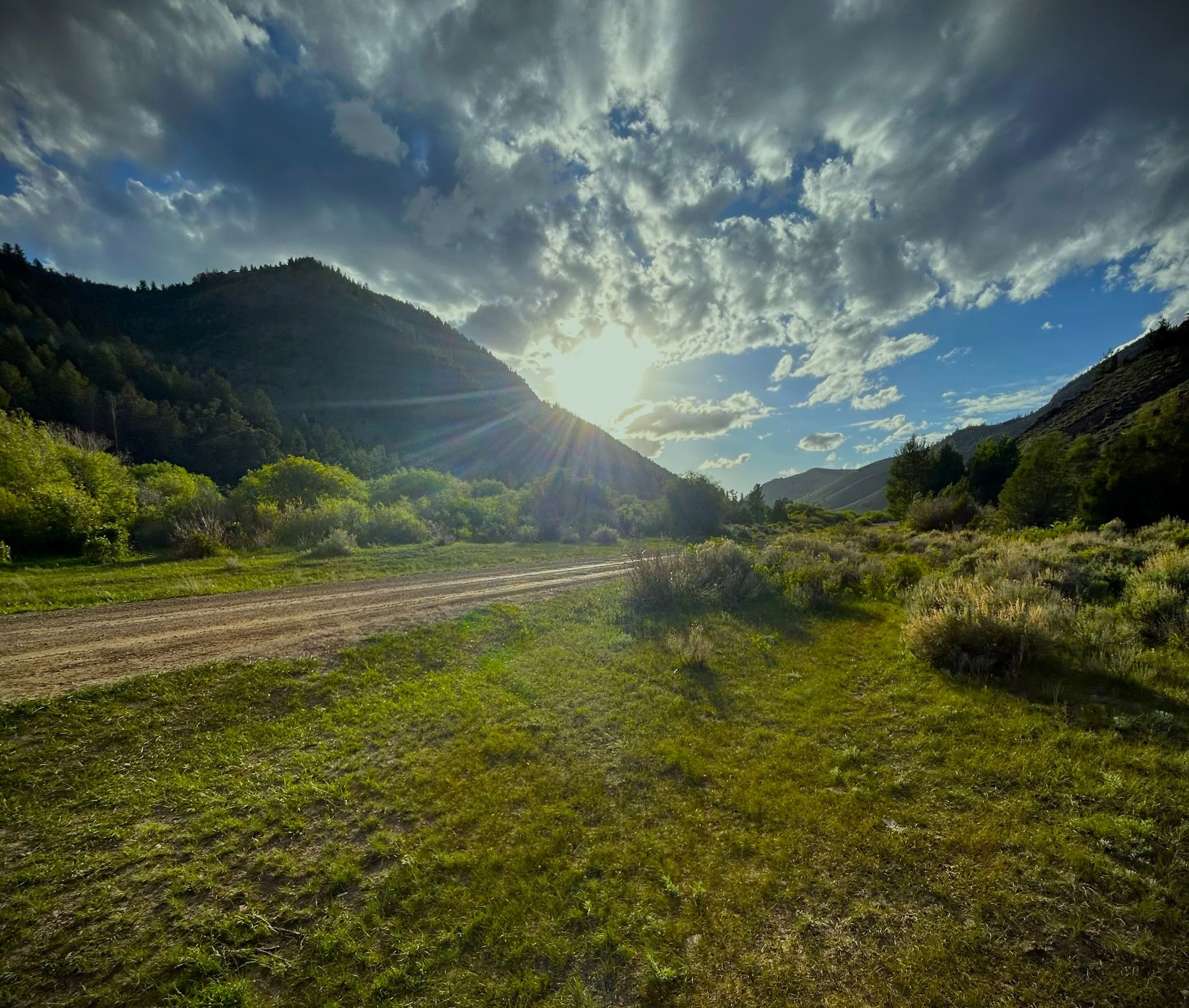
We proceeded to drive two and a half hours to our first Camp spot, which was LaBarge Creek. During the drive, I spotted two animals that I had never seen before: pronghorn deer and mule deer, and they were as free and wild as the landscape itself. A landscape that is barren with sagebrush and cattle as far as the eye can see, and great towering rock formations that were once cut by prehistoric rivers. As we descended into LaBarge Creek and the valley that surrounded it, it became a fertile canyon full of life that followed the stream as it meandered along the valley floor. As we settled into the campsite, I settled into the environment for the first time since getting off the plane and had an opportunity to take in my surroundings, and they were beautiful.
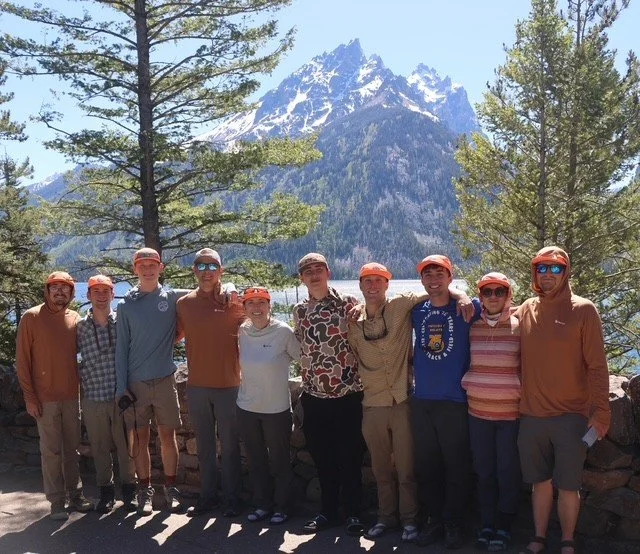
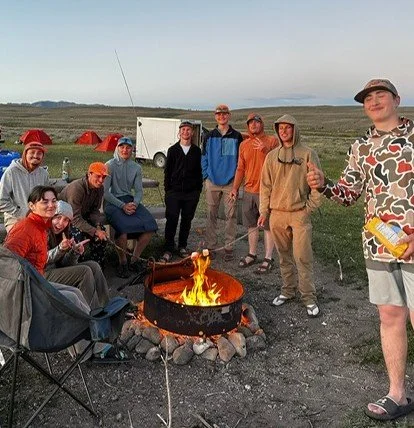
The cohort of campers consisted of 12 people from all over the country. There were two siblings from Wisconsin, my tent mate from Missouri, a camper from California, a camper from Oregon, and then three Mainers! One of the guides was from western Massachusetts, and the other two were from South Carolina. Being from different parts of the country, we all compared our respective States, our respective fish, and what we liked to hunt for. I was intrigued to find out that brook trout out west do not have a great reputation. I was told by one of the Trout Unlimited employees that brook trout and brown trout were introduced around the same time that the railroads were built, and they are heavy competition for the native cutthroat trout of the region. Maine having 97% of the wild brook trout population means that I am very accustomed to catching brook trout, and I see them as friends of sorts, a reminder of my home. This is not the case in Wyoming, and my mention of brook trout raised a few eyebrows for sure.
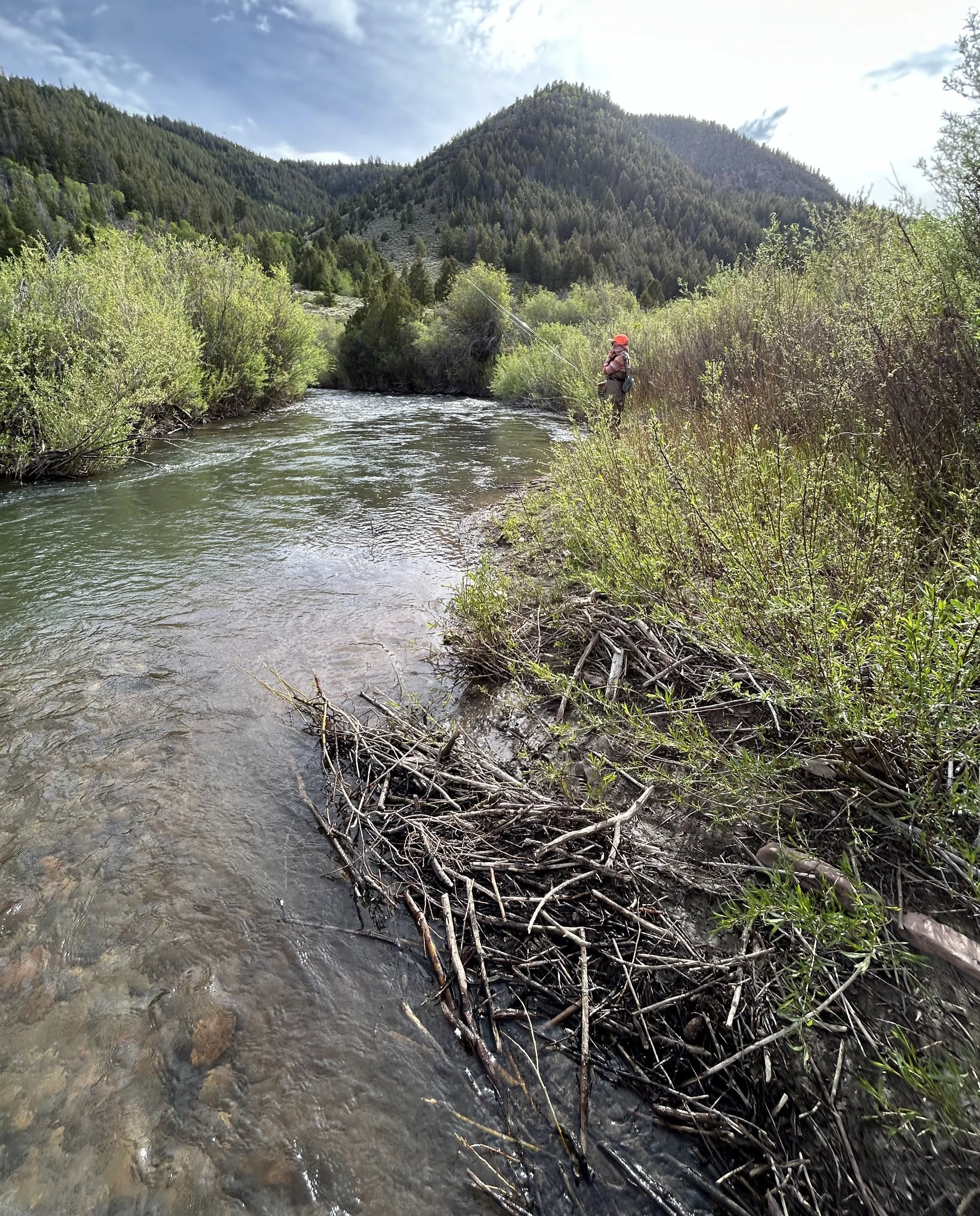
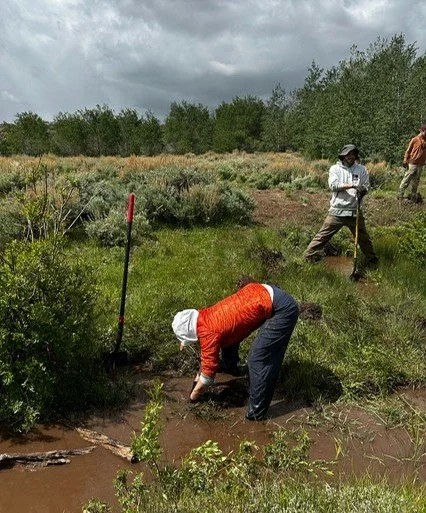
For the next few days, we fished, camped, hiked, and worked in the LaBarge Creek area. One of our first tasks and jobs that we were assigned to was building BDAs, which, to the uninitiated, is a Beaver Dam Analogue. It is a structure built by humans to mimic the function and design of a naturally occurring beaver dam, and it is constructed using natural building materials that beaver would incorporate in their dams, such as willows, cedars, birch, and a select few pine branches.
Denver is the Mile High City, but LaBarge Creek is at an elevation of 8,500 ft. Even very simple tasks such as collecting sticks or shoveling mud and dirt became difficult, and it took my body several days to adjust to this new altitude. After about four days of our 8-day trip, our time building BDAs was complete, and we migrated two hours Northwest to the town of Pinedale. On our first day in Pinedale, we had a new objective; it involved community outreach and youth participation. Two things that are cornerstones of the Trout Unlimited mission, I felt as though I was a missionary bringing the good news of conservation.
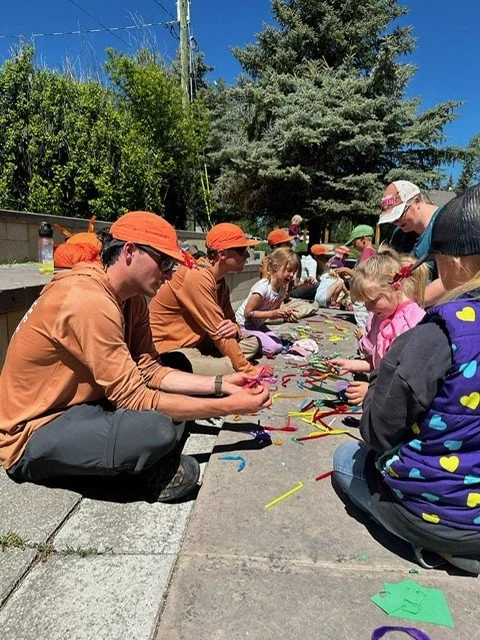
There are 2,000 people who live in Pinedale, and almost 200 of them attended this event. Many of them had young children looking for an outing on a Saturday, but a lot of them were deeply involved in conservation, and we're aware that in Wyoming they truly had a mystique of nature and a beautiful place to call home. The twelve of us were divided into two groups. One group was in charge of sampling the river and collecting samples of larvae and different flies and insects; we were the entomology group. The other half of the group was devoted to arts and crafts in the spirit of Entomology.
The afternoon hurried by, and the look of curiosity and genuine wonder was in the eyes of many people who spoke with us. A lot of people had no idea that there was a whole ecosystem within our river systems, and the sheer number of insects and their diversity was captivating. At the end of that day, we got to explore Pinedale, and we also got to pick our new campsite for the remainder of our trip. We migrated out onto BLM land and found a wonderful patch of real estate right in a bend of the mighty Green River. I had never seen the Green River; I had only heard of it through books talking about immigrants trying to ford the Green River on their way to Oregon.
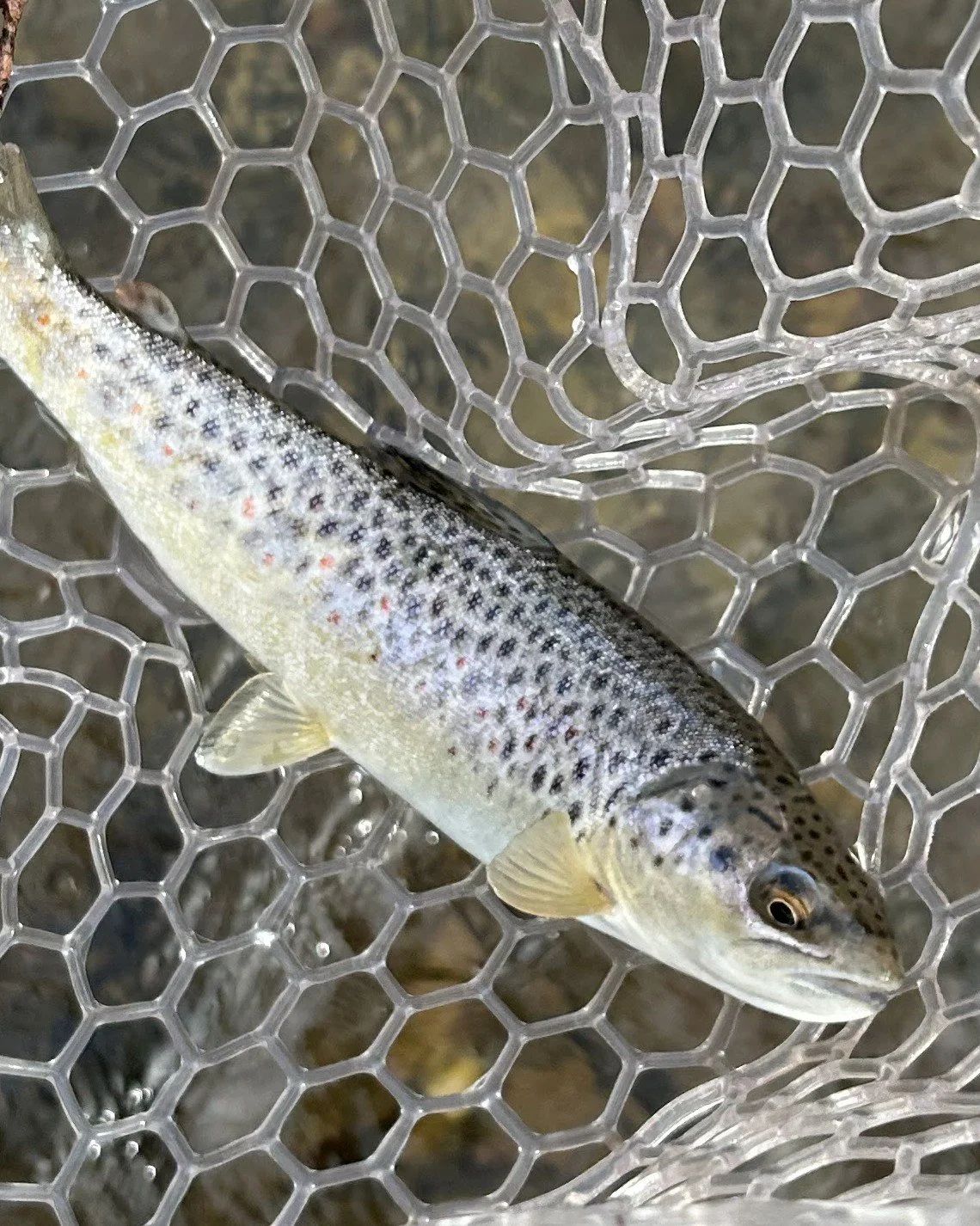
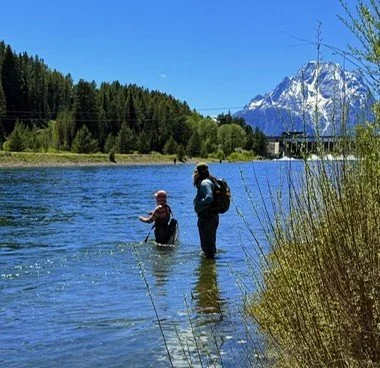
Our evenings on the Green River were truly memorable, and I think we may have set the world record for the number of white fish caught. We pondered if we should rename Trout Unlimited to Whitefish Unlimited! But ultimately, enough trout were caught to maintain the name Trout Unlimited. It was camping on the Green River where I began to feel a genuine connection with the other participants; we were no longer in the icebreaker stage of companionship; we were starting to become real friends. Laughing together, fishing together, having fires, I felt I was in the company of family, and in the short amount of time that I had been there, I made lasting connections.
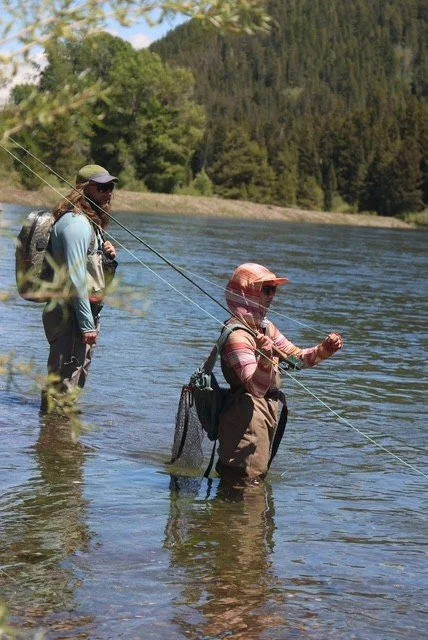
Our final community outreach event was a casting demonstration, and the majority of participants had never even held a fly rod until that day. There were two participants to one camper, and it was our job to teach them the basics of fly casting, but also to just have fun and enjoy the opportunity to teach someone something that we were passionate about. I was paired up with two women; one was from Maryland, and the other one was from Massachusetts. I am not a great teacher, but I tried my hardest to convey to them my interest in teaching them, and I think I did a pretty good job. Because when we were done, they were all smiles, and they could not stop raving about how, in a short amount of time, they were now expert fly casters! That was how the whole group felt, participants and campers alike; we all learned from each other, and we all had a feeling of camaraderie after our lessons were through.
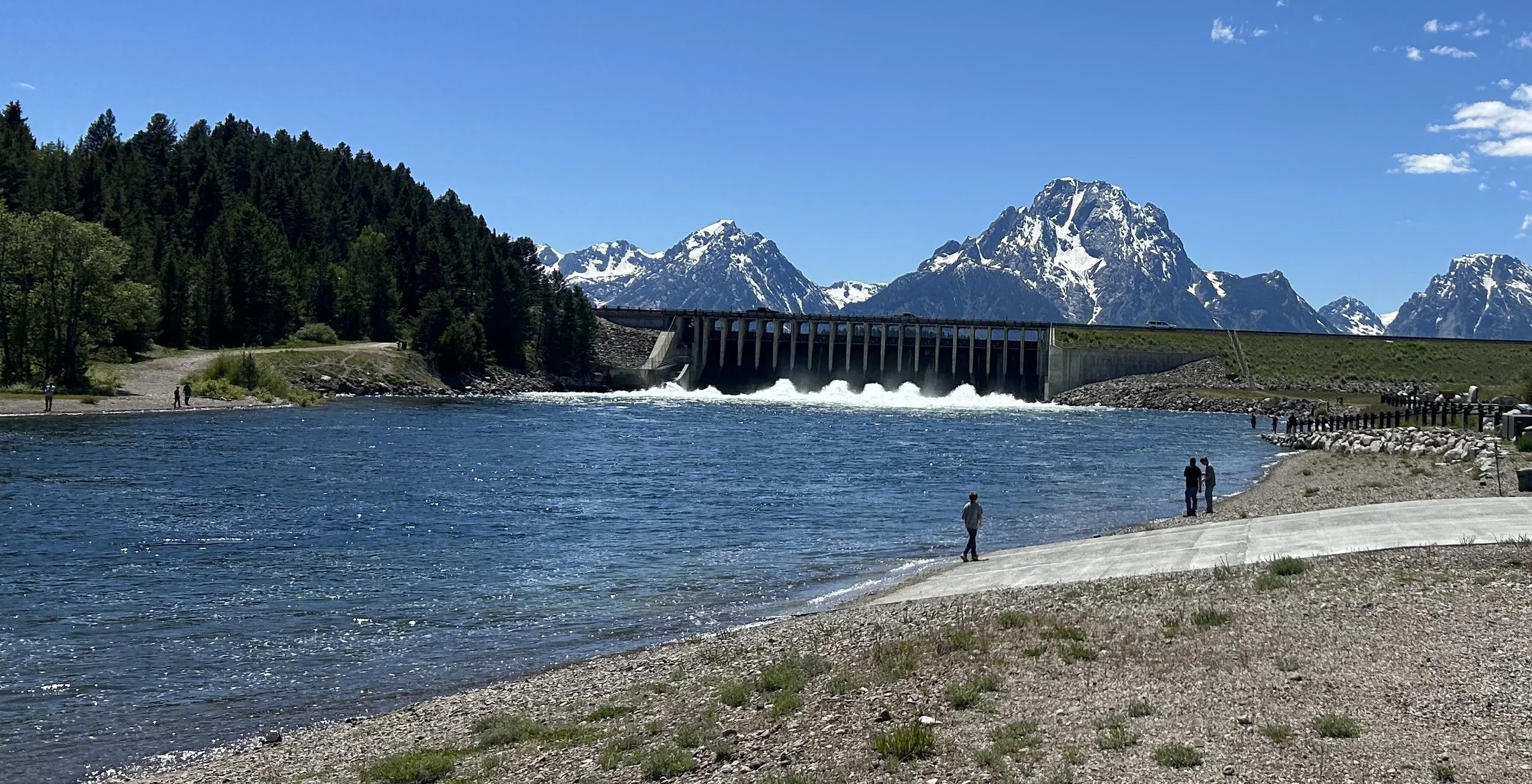
Some honorable mentions of the trip were our journey to the Grand Teton National Park, which was breathtaking; I had never seen mountains like that before. Our trip to Jackson Hole, where the Wilds of Wyoming met a booming town full of opportunity. And the friends I made along the way: Cody, Brodie, Blake, Chris, Paul, Cole, Grant, Lauren, Júlia, Zöe, Christian, and Xander. Thank you for making this an extremely memorable experience and thank you to the TU Sebago Chapter for all of your support and your continued support in making this trip happen. It was truly the trip of a lifetime.
For more information on TU Expeditions visit https://www.tu.org/conservation/outreach-education/headwaters-youth-program/trout-unlimited-expeditions/
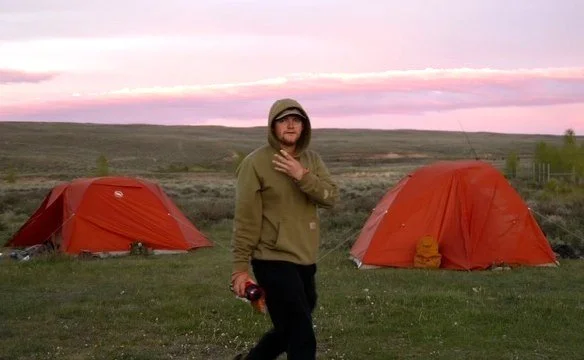
Luke Fogg
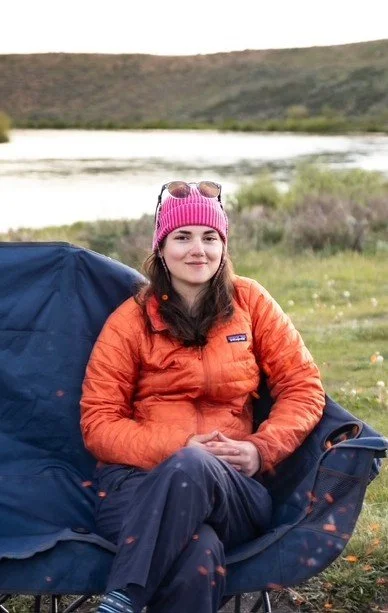
Júlia Marquardt Luesma