
The Upper Androscoggin River Renaissance
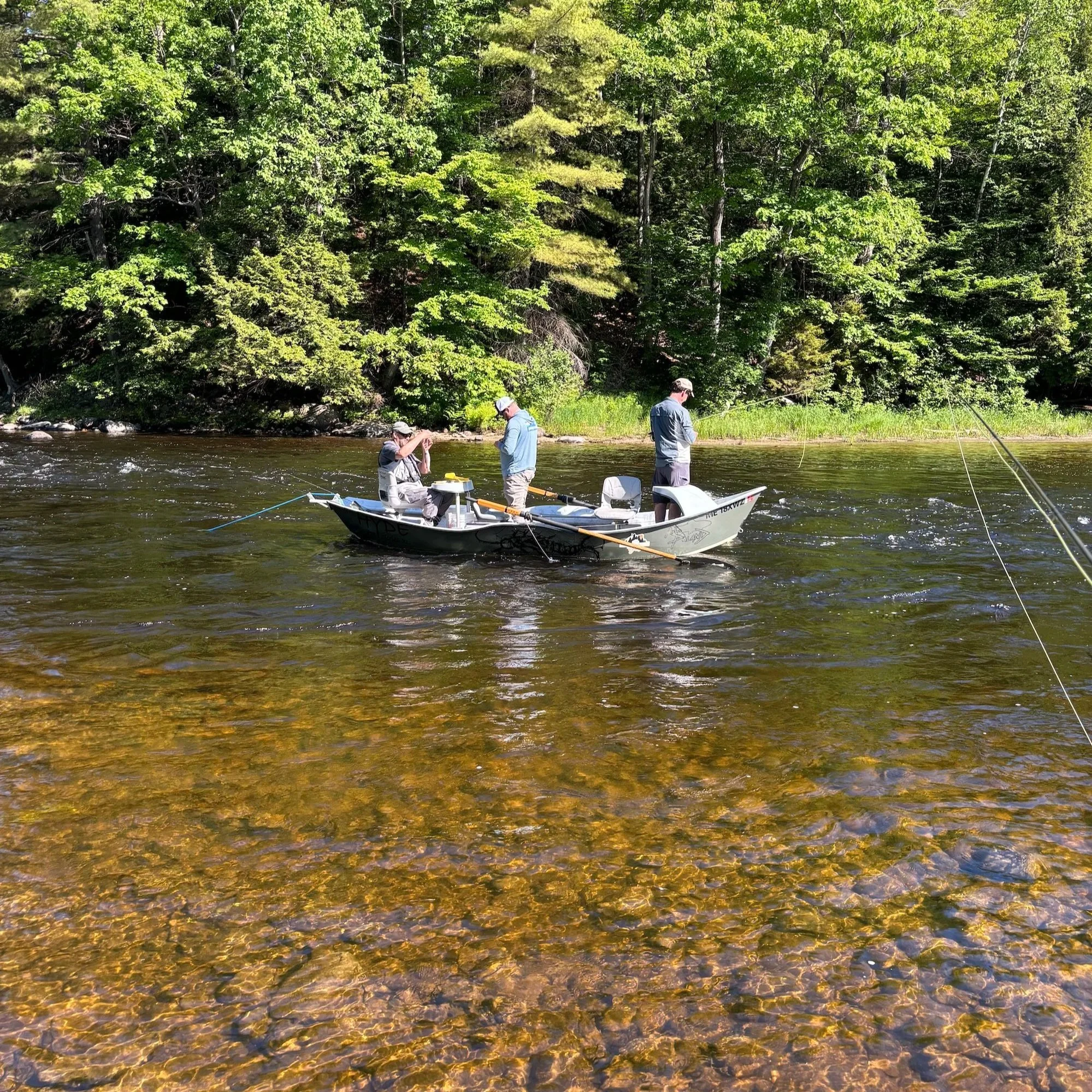
Members of Sebago TU, along with teams from Maine IFW, have been working in the Upper Androscoggin to pursue a study looking at how stocking programs in the watershed might be impacting wild fish populations.
Work done in 2025
We continued to manage the Volunteer Log Boxes with IFW support. This is the second year of capturing volunteer fishing logs for community-sourced data.
We also performed the Spring and Fall float trips, with biologists and guides collaborating to collect samples.
We performed two (2) days of coldwater refuge mapping with Nick and Brian. This was new for 2025 and was very insightful.
We deployed three (3) HOBO data loggers for the second year. Unfortunately, one site was vandalized, and we will need to change its location for next season.
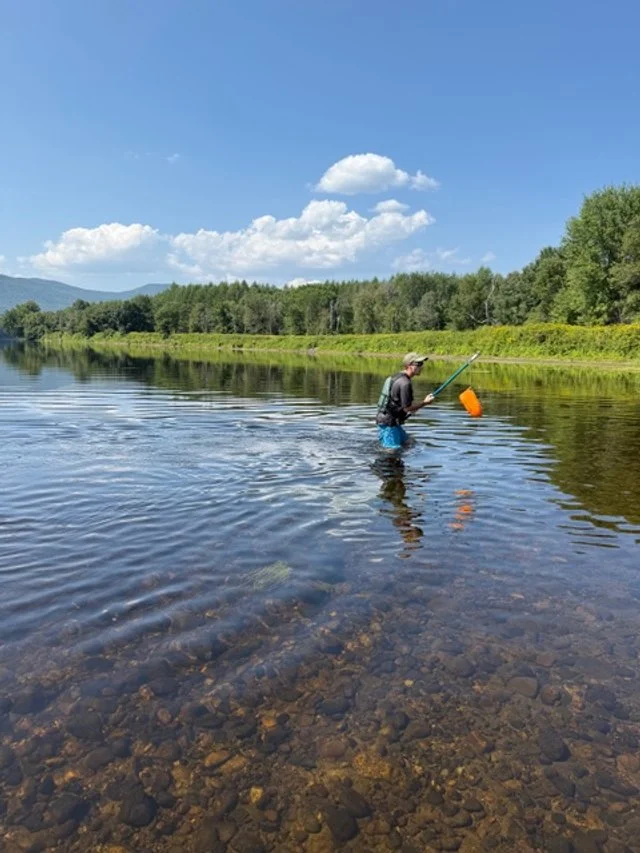
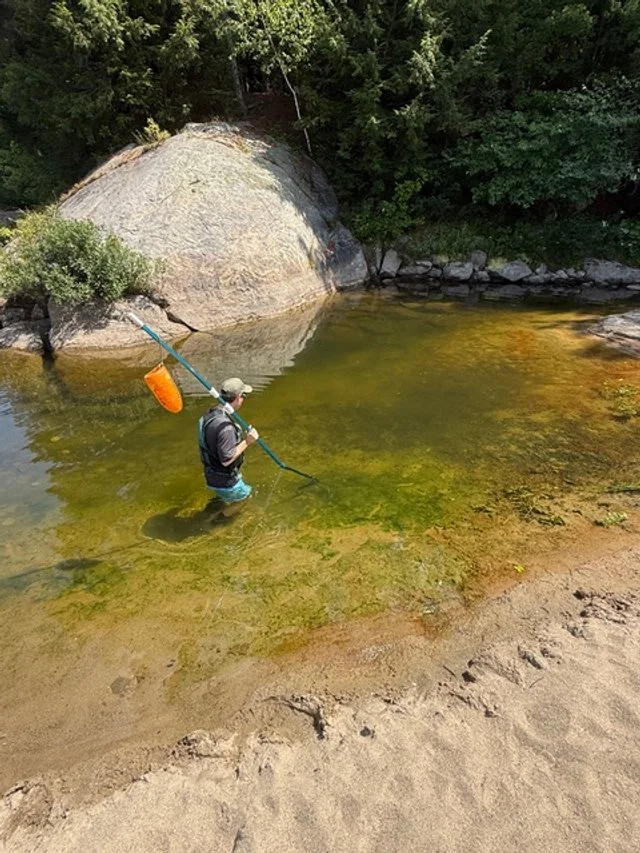
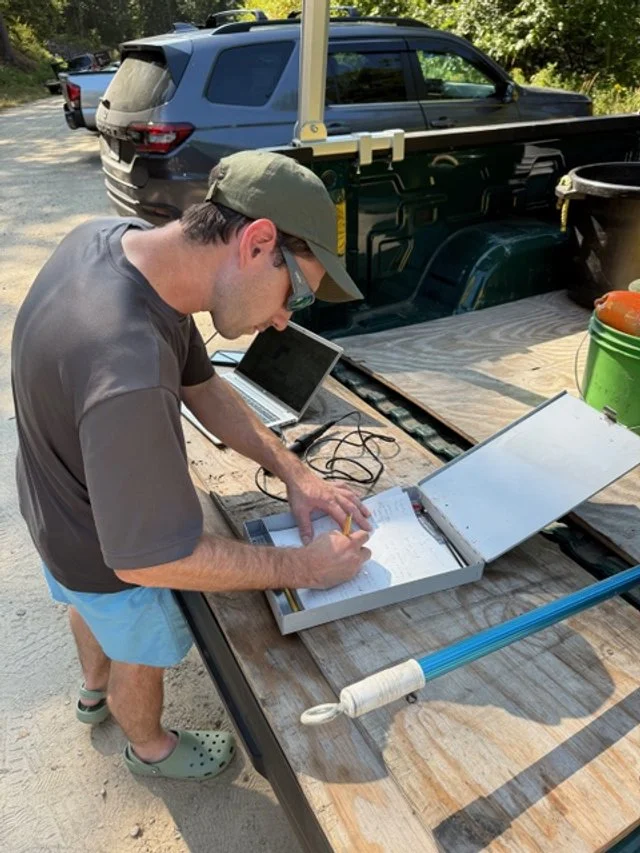
Insights from coldwater refuge mapping!
This was new for 2025, but for the past 10-12 years, we had been observing fish using coldwater refuge areas in the hot part of summer. This is problematic for wild fish in the system because refuge is not unlimited, and stocked fish crowd these locations, often blocking wild fish. This is possibly due to the proximity of stocking locations and how close they are to the coldwater refuge spots. However, we did see areas where stocked trout traveled long distances from stock sites to the cold water refuge locations.
Lary Brook is an example. There are no stocking locations within 2 miles, yet when we mapped the location, there were an estimated 200-300 brook trout that appeared to be stocked. We also observed brown trout and rainbow trout using the coldwater location as well.
Nick and Brian from IFW have the data on all the sites, and we found a number of them. The main stem of the Andro was at 80 degrees at the time of our mapping, and water levels were very low at the time.
Despite that, we found locations with water in the 60’s, 50’s, and even one location that recorded a temp of 48 degrees — in August!!!!!
While out, we observed fish that had lures in their sides broken off due to snagging, and we also observed guided fishing taking place during a hot snap, when fish need a break the most.
What can we draw from the cold water mapping?
We proved that coldwater refuge does exist at spring locations and tributary mouths sufficient to sustain wild trout.
The fish are vulnerable at these locations due to anglers and natural predators.
Poaching takes place, and I even had to turn away a group of teenagers who had come to worm fish (in August) over a pool of trout held in the refuge. Note: worm fishing was illegal at the time.
Guides are leading trips over these locations throughout the hot times of the year.
Stocked trout are taking up these valuable lies. Stocked brook trout, in particular, do not hold over from season to season and are taking up valuable wild trout habitat.
Nick, Brian, and I all noticed that at multiple tributary locations, the sediment has created a delta-like environment where fish passage at times of low water is difficult or impossible into some of the tributaries. These tributaries sometimes still offered coldwater refuge due to water seepage through the deltas, but they are prime candidates for habitat improvement.
Biggest areas for TU’s Conservation efforts moving forward in 2026:
Possible push for the Upper Andro to be closed during the heat of summer, or at the very least to have added protection for the coldwater refuge locations. Logistically, it would be easier to close the full section of the river we studied in July and August to any fishing.
We should continue to study and collect scale samples of the wild population of trout in hopes that we can have a stocking-free period to assess if a wild trout recovery is possible.
Push to study the Wild River more in coordination with NH Fish & Game, as it is the largest (and historically best) spawning and nursery habitat for wild trout in the region we studied. This should be managed the same as the Andro, and it would benefit from eliminating stocking as well.
The biggest thing TU could probably do to assist is…funding habitat restoration and executing improvements at the tributary mouths — which are filled with sediment. These locations would also benefit from structure and overhead cover. The addition of shade and protection from the eagles that patrol these areas would be beneficial — as all of these tributaries have populations of wild brook trout.