TU Volunteers Assist Royal River Crossing Survey
In 2024, the US Army Corp of Enginers produced a Royal River Aquatic Ecosystem Restoration Study, which recommended the removal of both the Elm Street and Bridge Street dams in Yarmouth — which was then approved by the Yarmouth Town Council in January 2025.
This month (Jan. 2026), The Royal River Restoration Project was awarded a $1 million grant from the Maine Natural Resource Conservation Program to begin the removal of the Bridge Street dam and fishway later this summer 2026.
Removing these barriers is just the start of openning up the Royal River to anadromous fish. There are over 200 road and railroad track crossings, as well as other barriers to fish passage, that will be addressed in a wider Royal River Watershed Restoration Program.
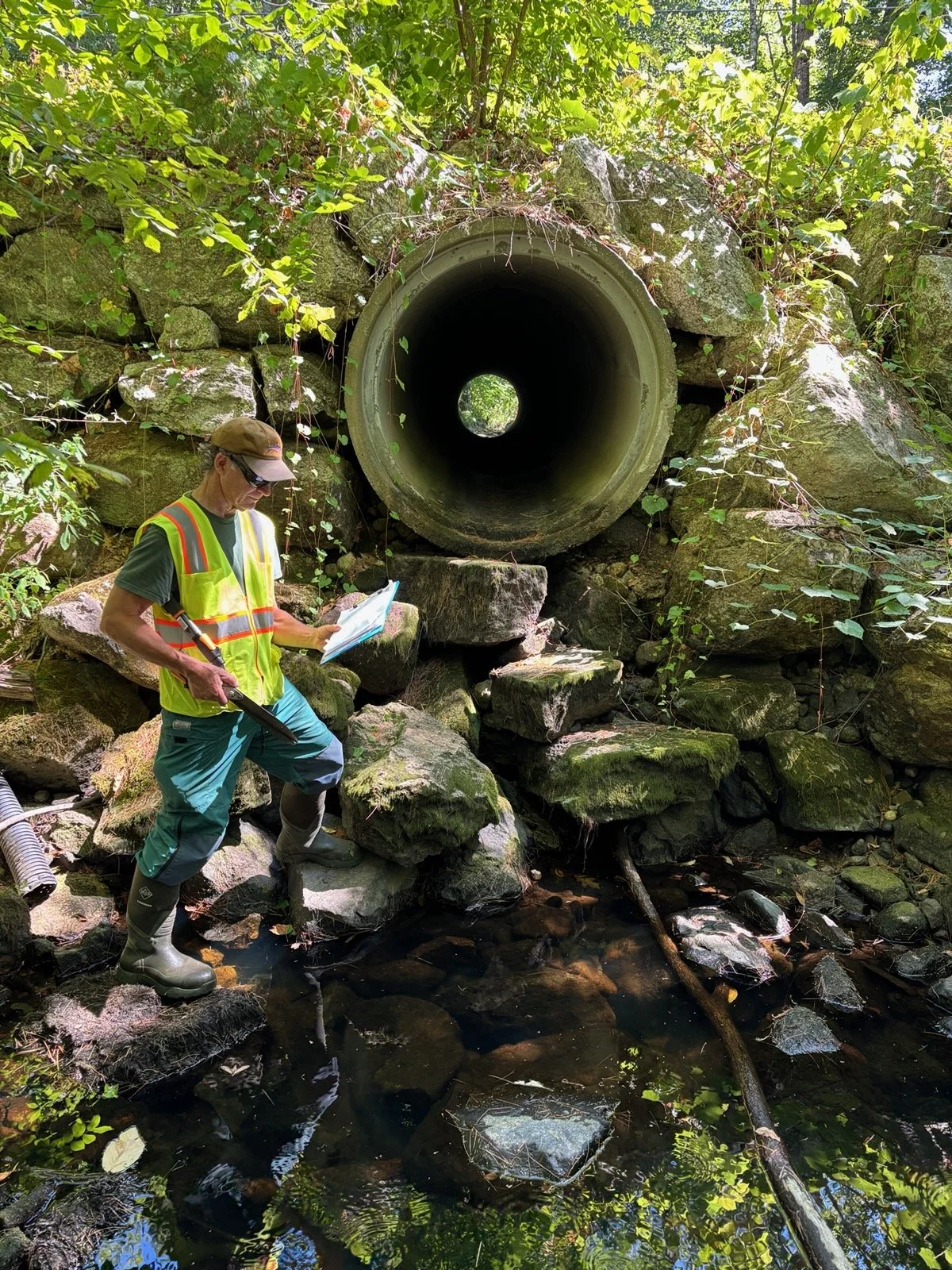
In August of 2025, a number of Sebago TU volunteers, including Chris Ricardi, Robb Cotiaux, Jim Wescott, Emily Lever, and Lyndon Pisanski, gathered with Watershed Restoration Program Coordinator Mike Brandimarte and other volunteers from the Royal River Conservation Trust.
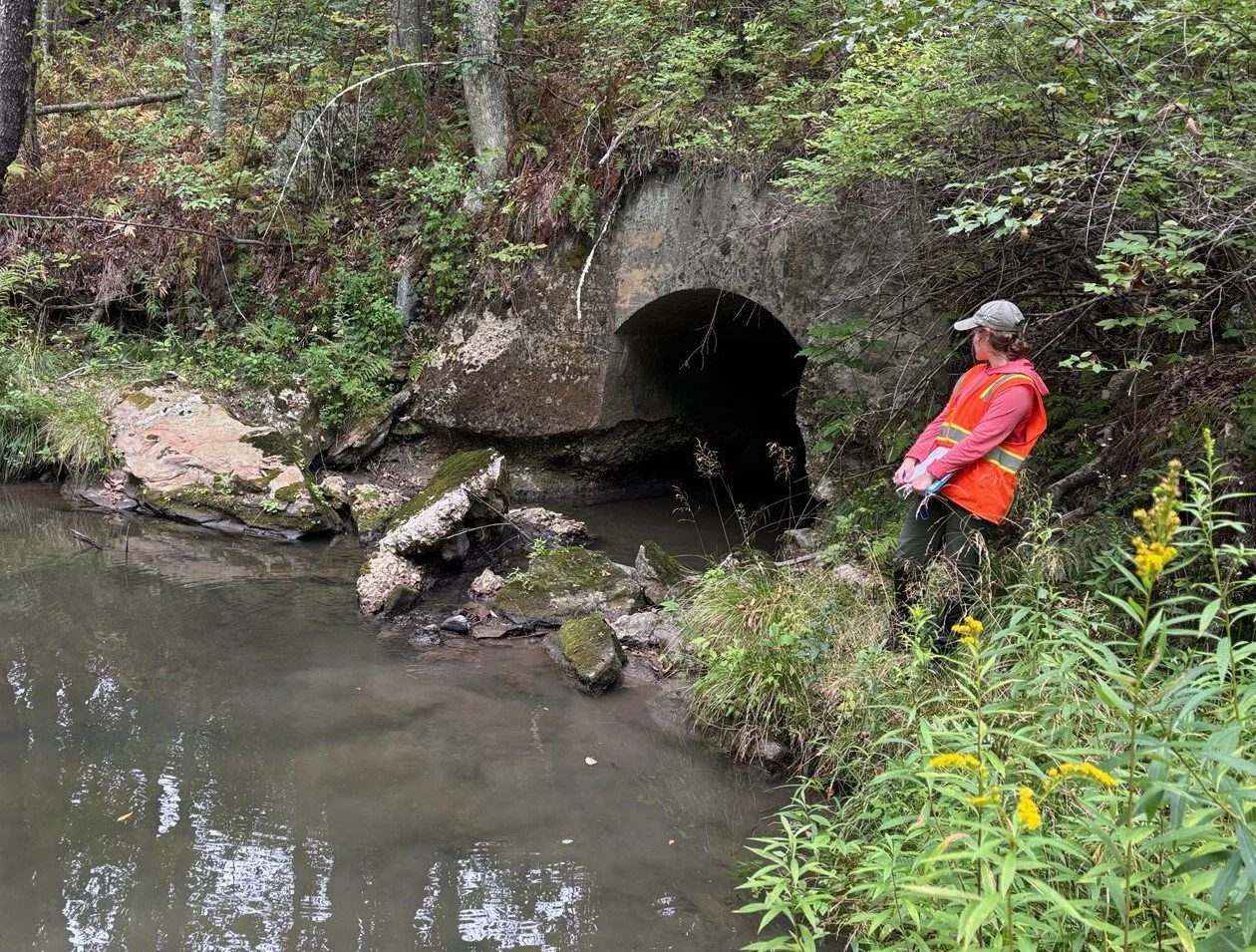
The group reviewed maps of tributaries in Auburn, Durham, Gray, New Gloucester, North Yarmouth, Pownal, and Yarmouth, and the goal was to examine all river crossings in the watershed.
Each crossing was photographed, culverts and bridges were measured and evaluated for functionality, and water temperatures were recorded.
The data will be used to help prioritize restoration locations for future work along the Royal River and its many tributaries.